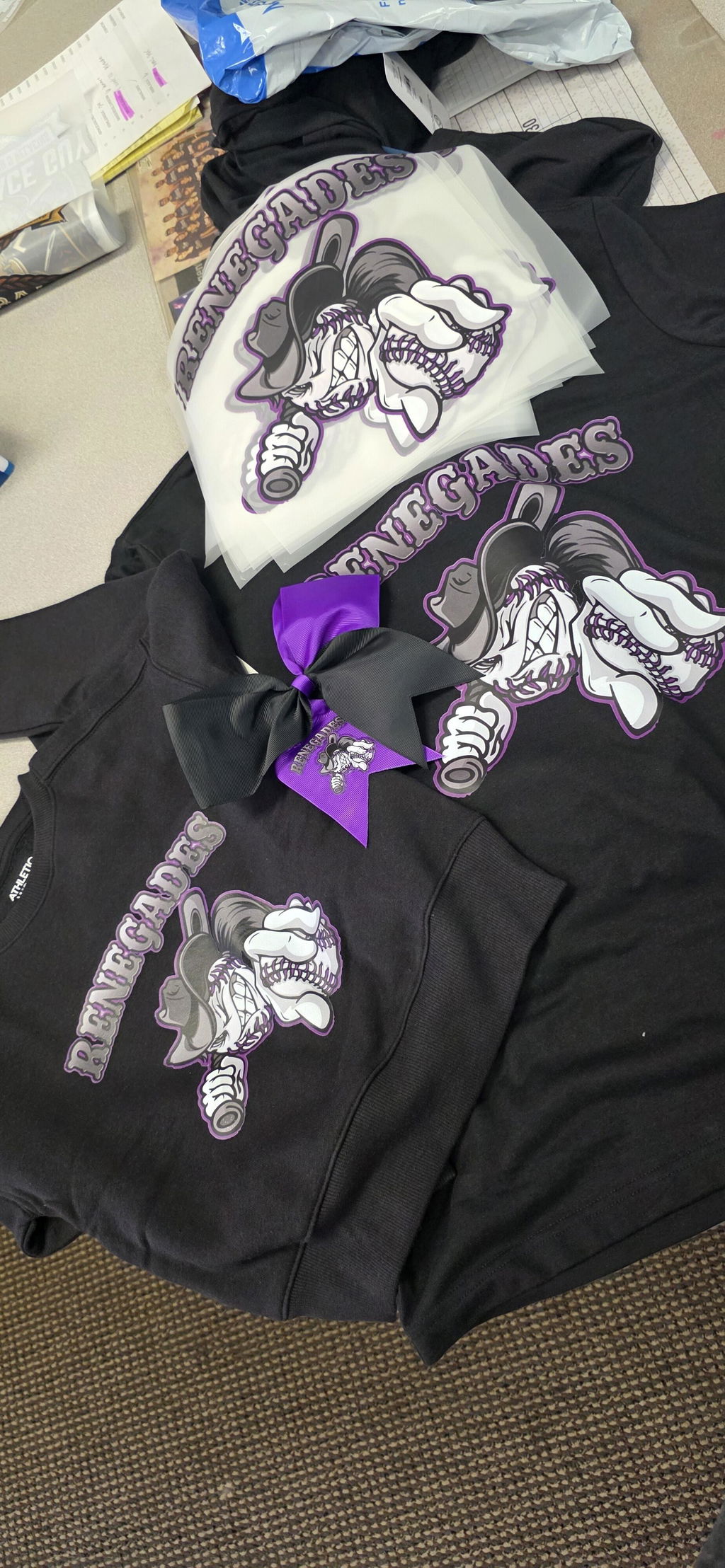
How to Price Custom Shirts (With Real Numbers)
Share
Most people pricing custom shirts count the blank and the transfer, forget their own time, and wonder why the business feels busy but not profitable. Here is a method that holds up.
Step 1: Your true cost per shirt
Four components:
- Blank garment — whatever you pay, including shipping
- Transfer — your gang sheet cost divided by the number of prints you got from it
- Labour — realistically 3–5 minutes per shirt including pressing, folding and packing
- Overhead — packaging, a share of your press, listing fees
Step 2: Work out the transfer cost properly
This is where gang sheets change the maths. Film is priced by area, so the cost per print depends entirely on how well you pack the sheet.
A 22" × 120" (10 ft) sheet packed with, say, twenty 10" × 12" front prints gives a per-transfer cost that is a fraction of ordering those designs individually. The same sheet half empty costs the same and doubles your per-print cost. Layout tips are in what is a DTF gang sheet.
Step 3: Apply a multiplier
Once you have a true cost, common practice in custom apparel is:
- 2× cost — bulk and wholesale orders
- 2.5× cost — standard retail
- 3× cost or more — one-off custom work, personalised names, rush jobs
The multiplier is not greed — it covers the orders that go wrong, the blanks that get ruined, and the time you spend on customers who do not buy.
Charge properly for one-offs
A single personalised shirt costs you almost as much in time as ten identical ones, because the setup is the same. Either set a minimum order, or charge a one-off fee that reflects the real work. Sellers who price single custom items the same as bulk items lose money on every one.
Volume discounts that still make money
Your cost per shirt genuinely falls with volume — better blank pricing, a fuller gang sheet, less setup time per unit. So a tiered price is honest, not a giveaway. Just make sure the discount tracks your actual cost curve rather than a number that sounds good.
Do not compete on price with print-on-demand
You will lose. What you have that they do not is speed, quality control, local pickup, real customer service and the ability to handle odd requests. Price for that.
Bulk and roll pricing
If you are running steady volume, look at bulk sheets at $2/ft or a full roll — our roll buying guide shows the break-even point.
Selling on Etsy? See DTF for Etsy sellers.